Hampi: A City in Ruins, Still Full of Life


Hey there! I recently visited Hampi, and honestly… It was an unreal experience. Walking through the ruins of a city that was once as grand and wealthy as Rome felt like time-travelling, every turn had a new story, a new stone carving, and a “wait… this is HOW old?!” moment.
So here’s my little travel diary from Hampi, the places I explored, the sunsets I saw, the food I ate (important), and a bunch of photos in between because yes, I am a great photographer 😅.

Day One: Okay Hampi, Impress Me.
Day one started with us reaching Hospet around 12 pm. We checked into the hotel, took a much-needed rest (because travelling = tired), and by 2 pm we were out like “okay Hampi, show us what you got. 😅”
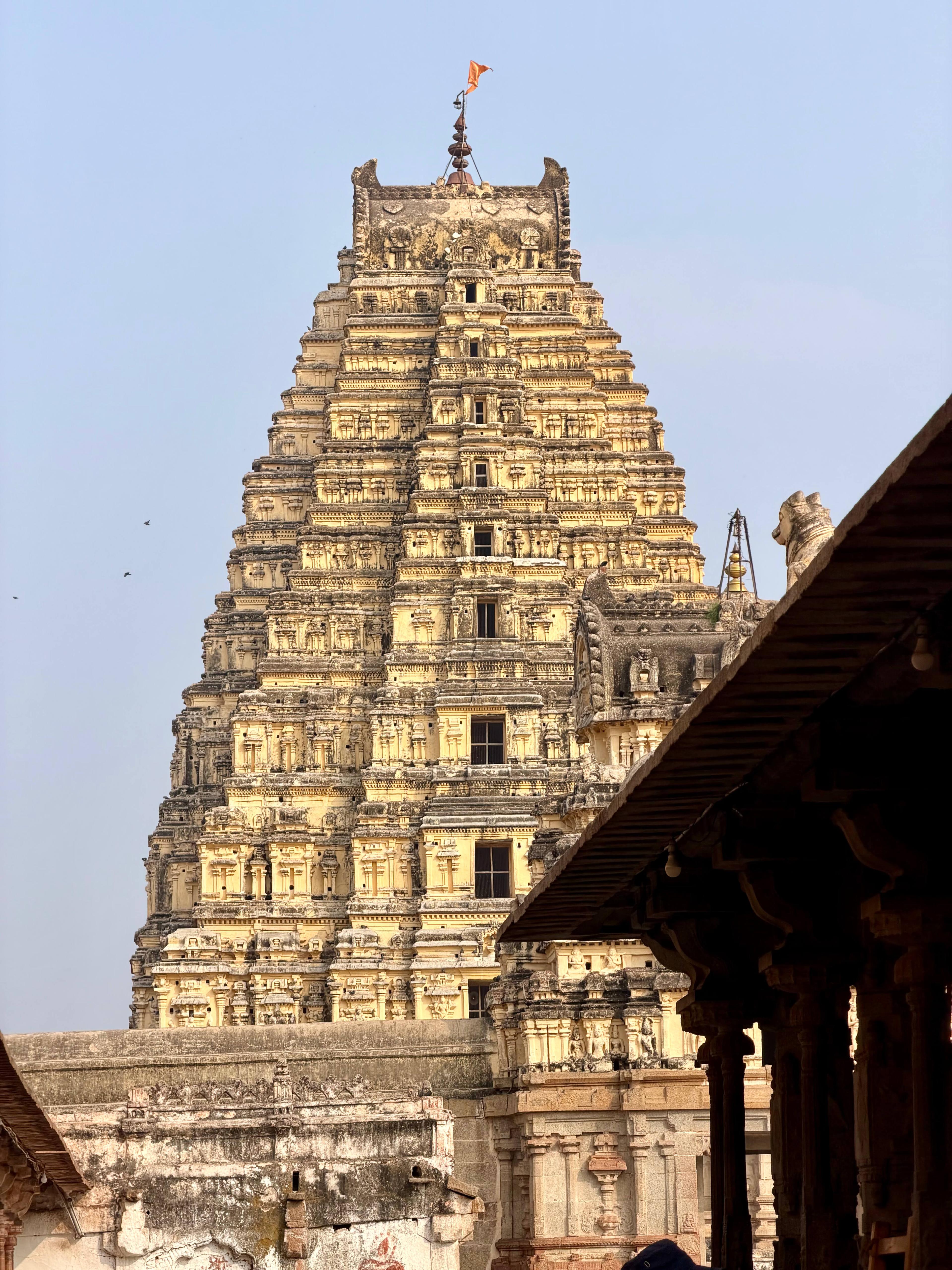
First stop was the Virupaksha Temple, one of the most iconic temples in Hampi and also a Shiva temple. We spent a good amount of time just exploring it, the vibe, the carvings, the energy… everything felt so old yet so alive.
And right at the entrance we met Lakshmi, the temple’s own elephant. Yes, an actual celebrity elephant. She was just standing there like she owns the place (which she kinda does 🐘).
This temple was built in phases, its origins go all the way back to around the 7th century, and then more additions happened later over time. What makes it even more special is that it’s said to be one of the few major temples that wasn’t destroyed after the fall of the Vijayanagara Empire in 1565, when the Deccan Sultanates attacked and the city was looted and ruined. People say the reason was that most temples had idols that were targeted, but here the main form of worship is a Shiva linga, which is not an “idol” in the usual sense and that’s why it survived. (History is wild, honestly.)
Inside the temple, we also saw this super fascinating thing, the inverted reflection of the temple structure (like a natural camera effect). It blew my mind because it’s basically ray optics in action, and it makes you realize people back then knew their science way too well.

Right outside the temple there’s a water pond, and the whole area around it has smaller temples and structures too, so it didn’t feel like “okay one temple done, next.” It felt like the entire place was one huge open museum.
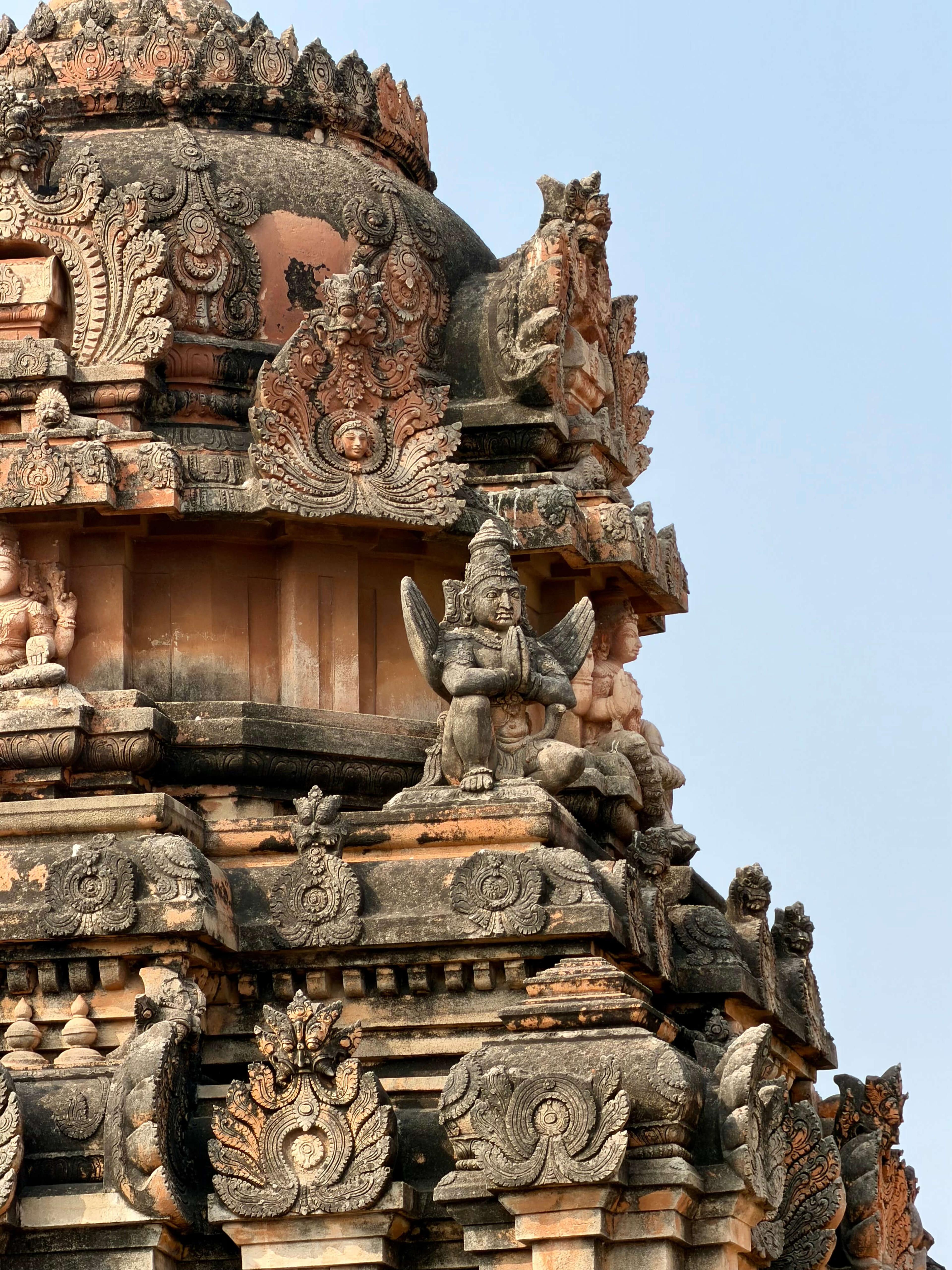
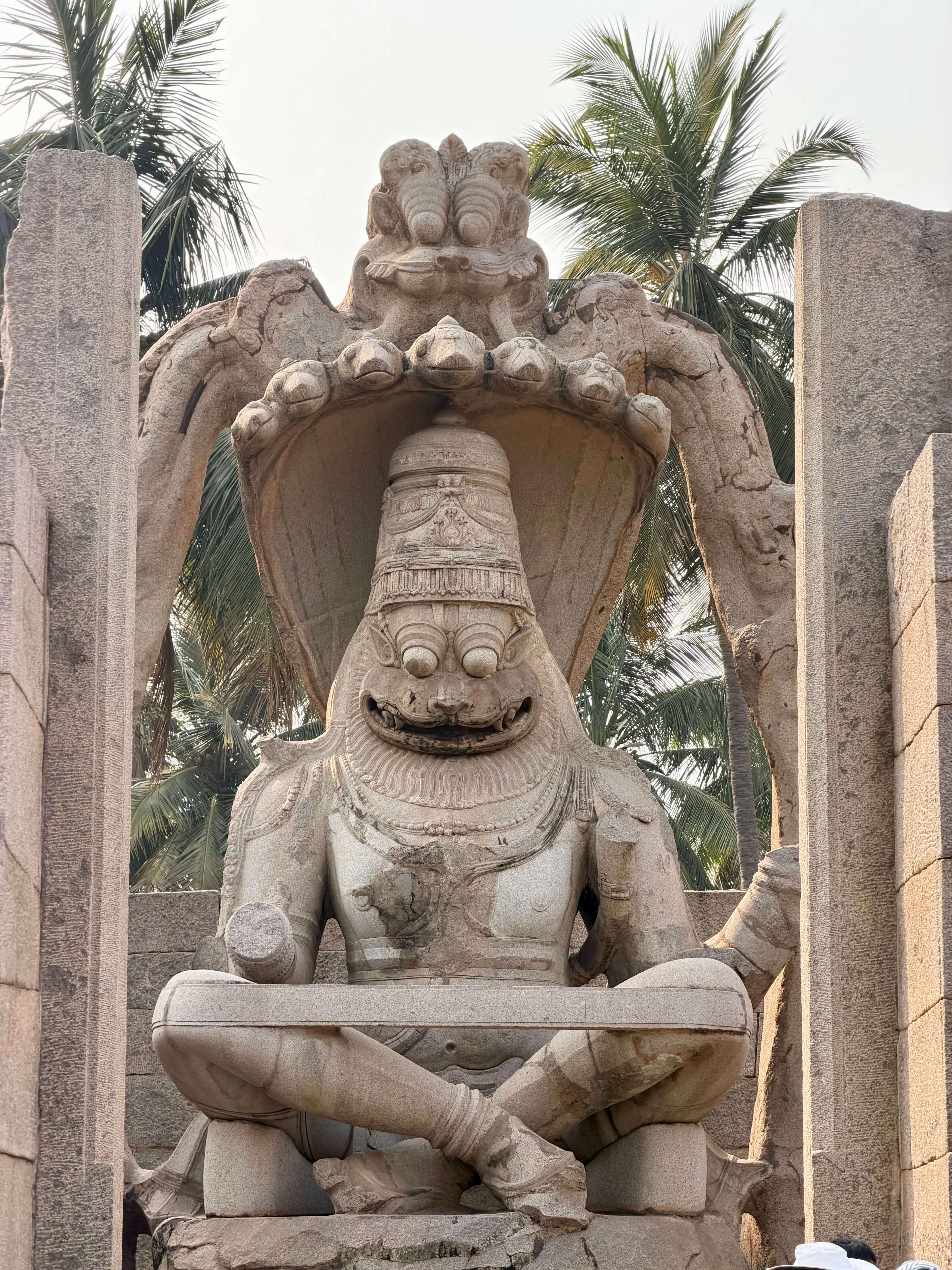
After that we went around covering a bunch of nearby spots, we saw Kadalekalu Ganesha, Saasivekaalu Ganesha, Hampi Shri Krishna Temple, Shri Lakshmi Narasimha Temple, and Badavilinga Gudi (where there’s always water around the linga, which was pretty cool to see).
By then we were hungry, so we stopped for a meal at this open, nature-y café by the road. Food was good, no complaints.
And since it was already getting late, we ended the day in the best way possible, sitting by Kamalapur Lake, watching this beautiful golden sunset, doing absolutely nothing… just letting Hampi sink in.
And yep, that was a wrap for Day One.
Day two: 575 Steps & Questionable Life Choices.
Day two started with a finger-licking good South Indian breakfast at Hotel Swathi and I’m not exaggerating. It was so good that we literally came back here for breakfast on the other days too. So yes, 100% recommended if you’re in Hampi and want a solid South Indian breakfast.
Post breakfast, we headed straight to the big one, the iconic Stone Chariot and the whole temple enclave around it. The carvings there are just next level. You can actually see how much effort and time must’ve gone into building all of that. And because it was pretty sunny, we sat there for a bit, just chilling and letting the beauty sink in (also because walking in Hampi sun is no joke).

Everywhere we looked, walls, pillars, even the ground, there were engravings and details. So much to take in that it genuinely made me believe the line people say: “You need months in Hampi to really see everything.”


After that, we walked towards Purandara Daasa Mantapa, which has this really nice seating by the Tungabhadra river. We dipped our feet in the cold water and just relaxed there for a good 15 minutes, best break ever on a hot day.

Then we moved on to Sugriva’s Cave, which has a pretty important connection to the Ramayana, and it was honestly a cool feeling to see it in real life. Nearby we also saw some beautiful structures like the Narasimha Temple, Gandhamadana Hill, and the best part, from there you can spot the Virupaksha Temple in the distance with the river flowing alongside. Proper postcard view.

Later in the evening, we went to Anjanadri Betta, which is said to be the birthplace of Lord Hanuman ji. The temple is on top of a hill… and to reach it you have to climb 575 steep steps. Not easy at all, especially in ~30°C, but since it was closer to evening, it was still manageable. After reaching the top, we took blessings and then sat there for sunset, lots of people were just sitting quietly and enjoying the view. Super peaceful.

After sunset, we came down and headed back, but on the way we stopped at the famous Mango Tree restaurant for dinner. There was a 20-minute wait, but the food was good, no complaints.
And then… back to the hotel. Another day done, Hampi still not done with impressing us.
Day three: Before Empires, Before Kings.
Day three started very early, even before breakfast, because we had planned something that was very very special to me. We drove around 1 hour from Hosapete (where we were staying) to a place from the Iron Age time period (approx. 800 BCE – 200 BCE).
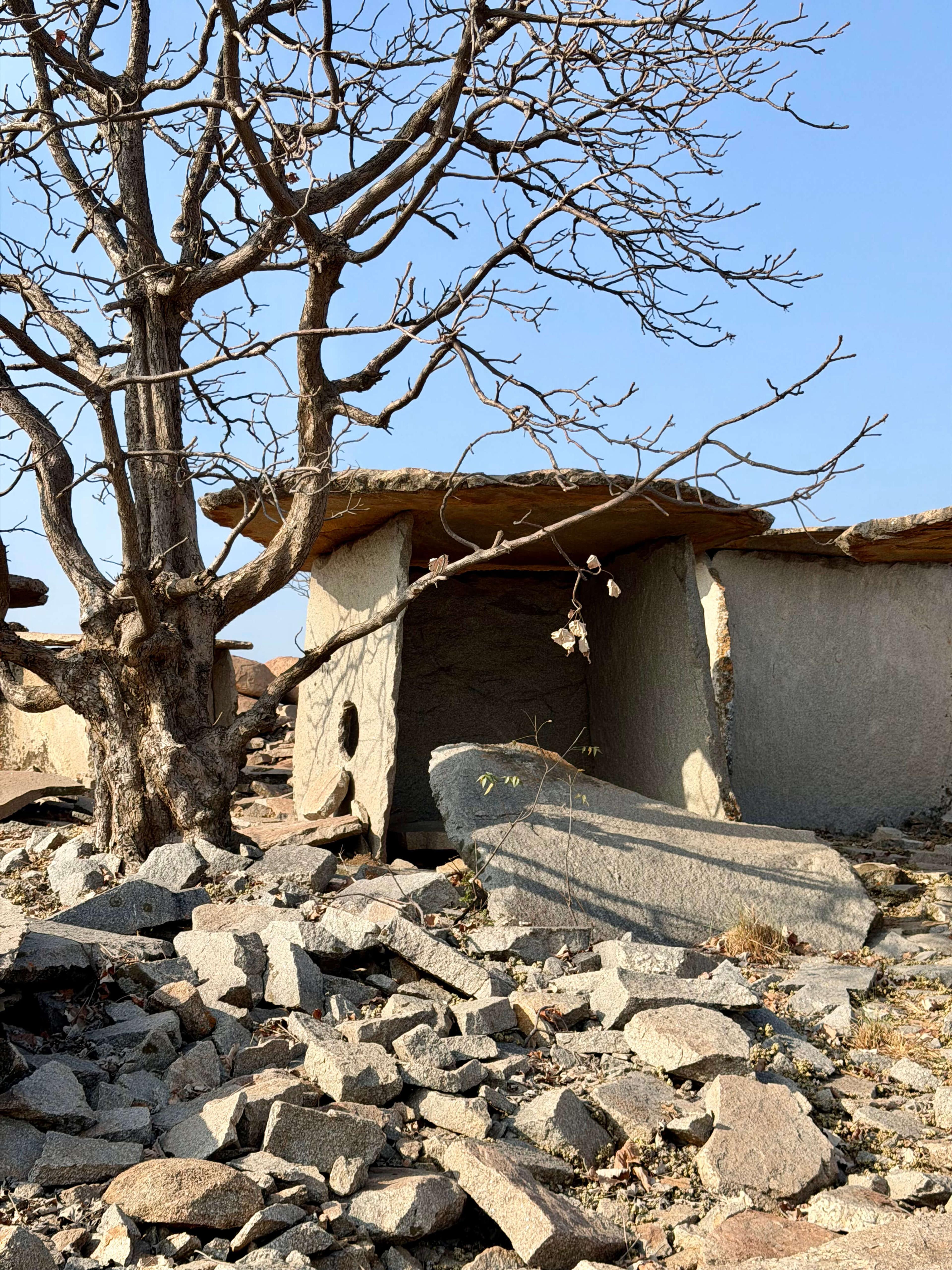
The place is called Heerebenkal Megalithic Dolmens, and honestly… it felt like stepping into a different timeline. This site is known for being one of the largest megalithic burial/necropolis sites in South India, with 1000+ structures/dolmens, cairns, rock shelters, all spread out across the landscape. And it’s said to be roughly 3,000 years old, which is just… crazy to even say out loud.
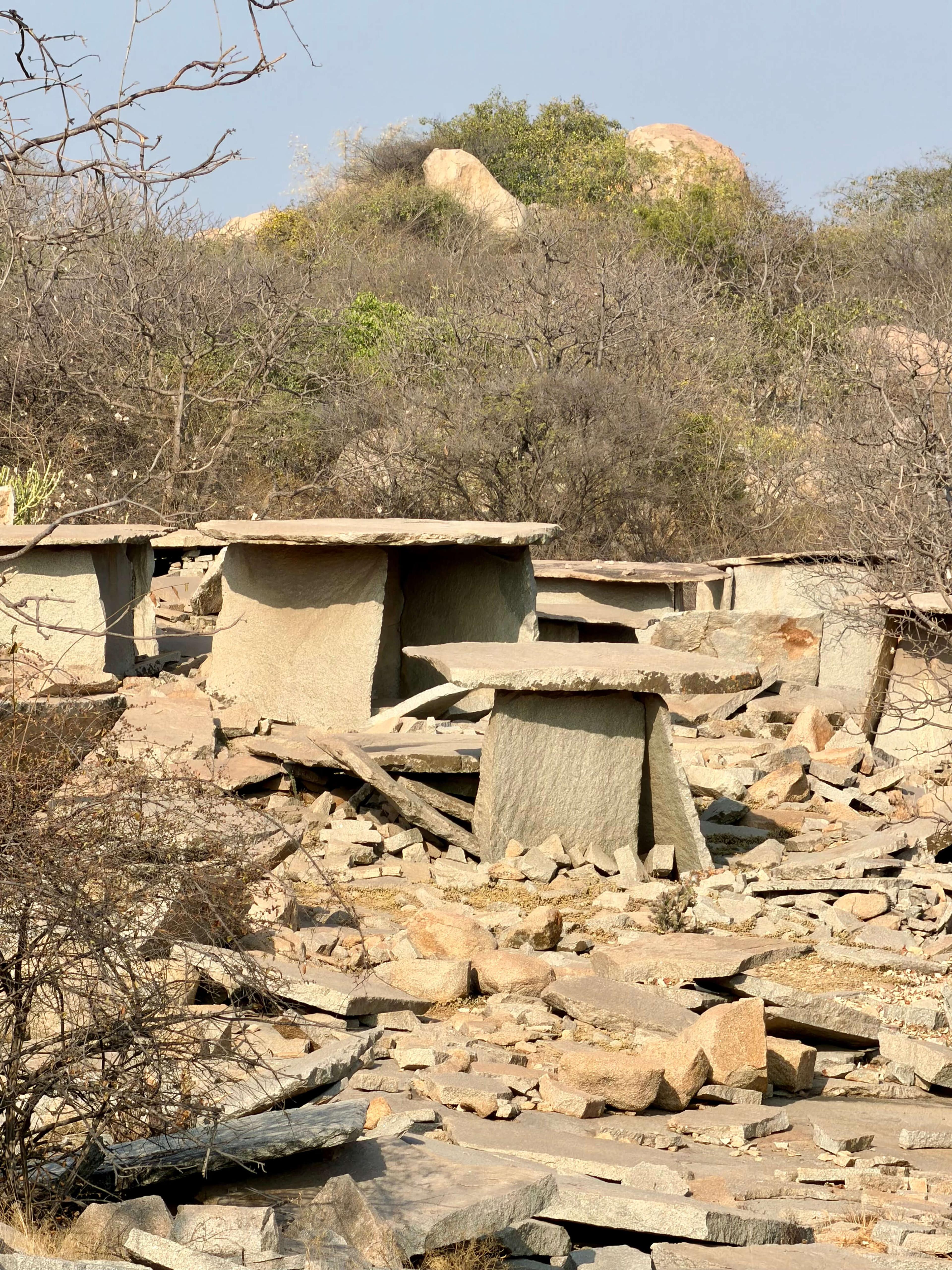
Locals call these structures “Moryar Mane” (houses of the dwarfs), and from what people believe, these dolmens were used as burial chambers or memorial structures. The site also has rock paintings in red ochre showing animals and human life (couldn't find 🥹), and there’s even this unique stone “kettledrum” kind of thing, which I found super interesting.
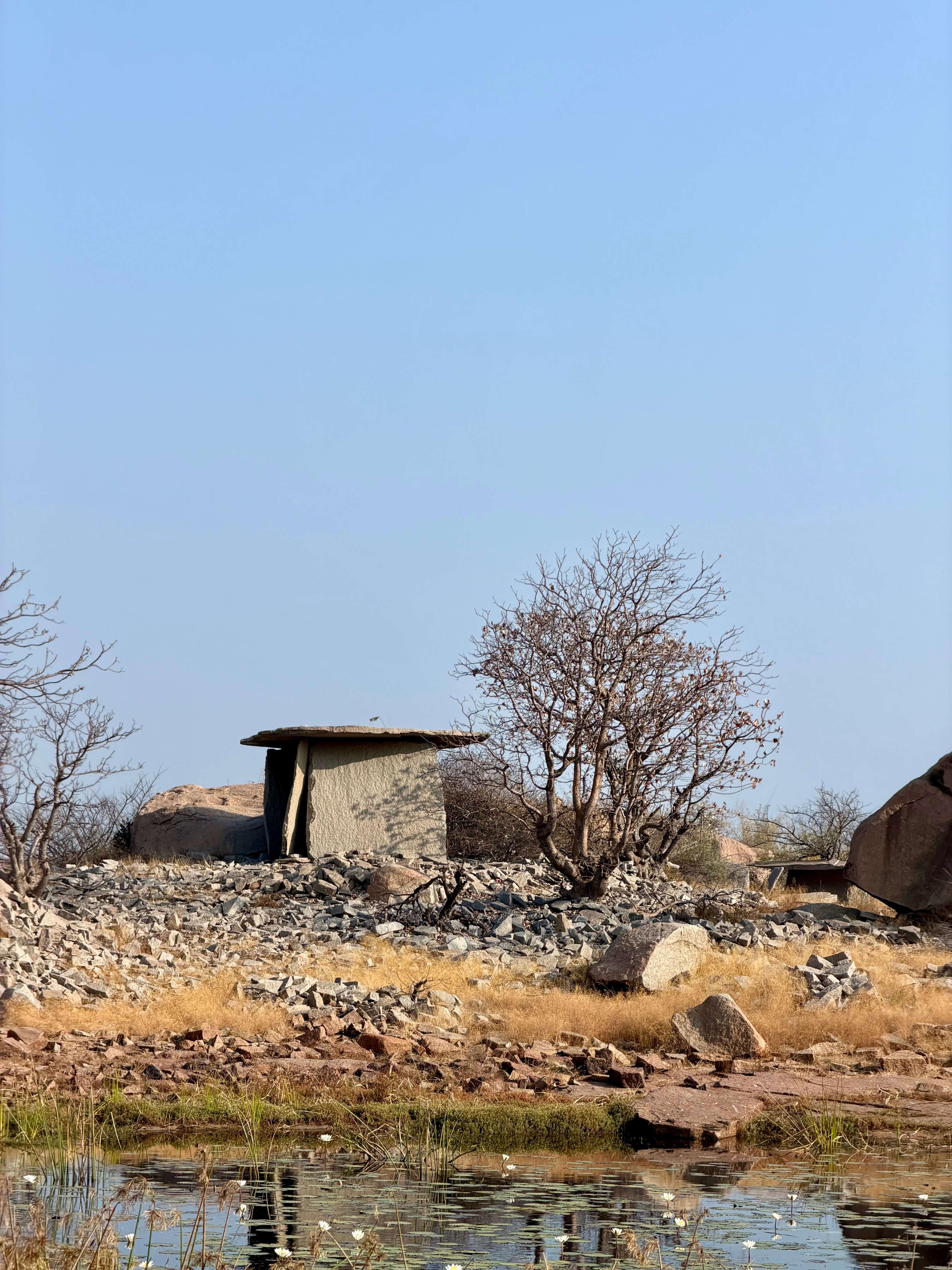
Getting there is an experience in itself, it’s like a 30–40 minute hike from the base of the hill. And because we went early in the morning, there was literally no one. The place was completely deserted. Just us, the wind, the rocks… and these ancient structures sitting there silently for thousands of years. It was honestly mesmerizing, and I can confidently say it felt like a once-in-a-lifetime kind of moment.
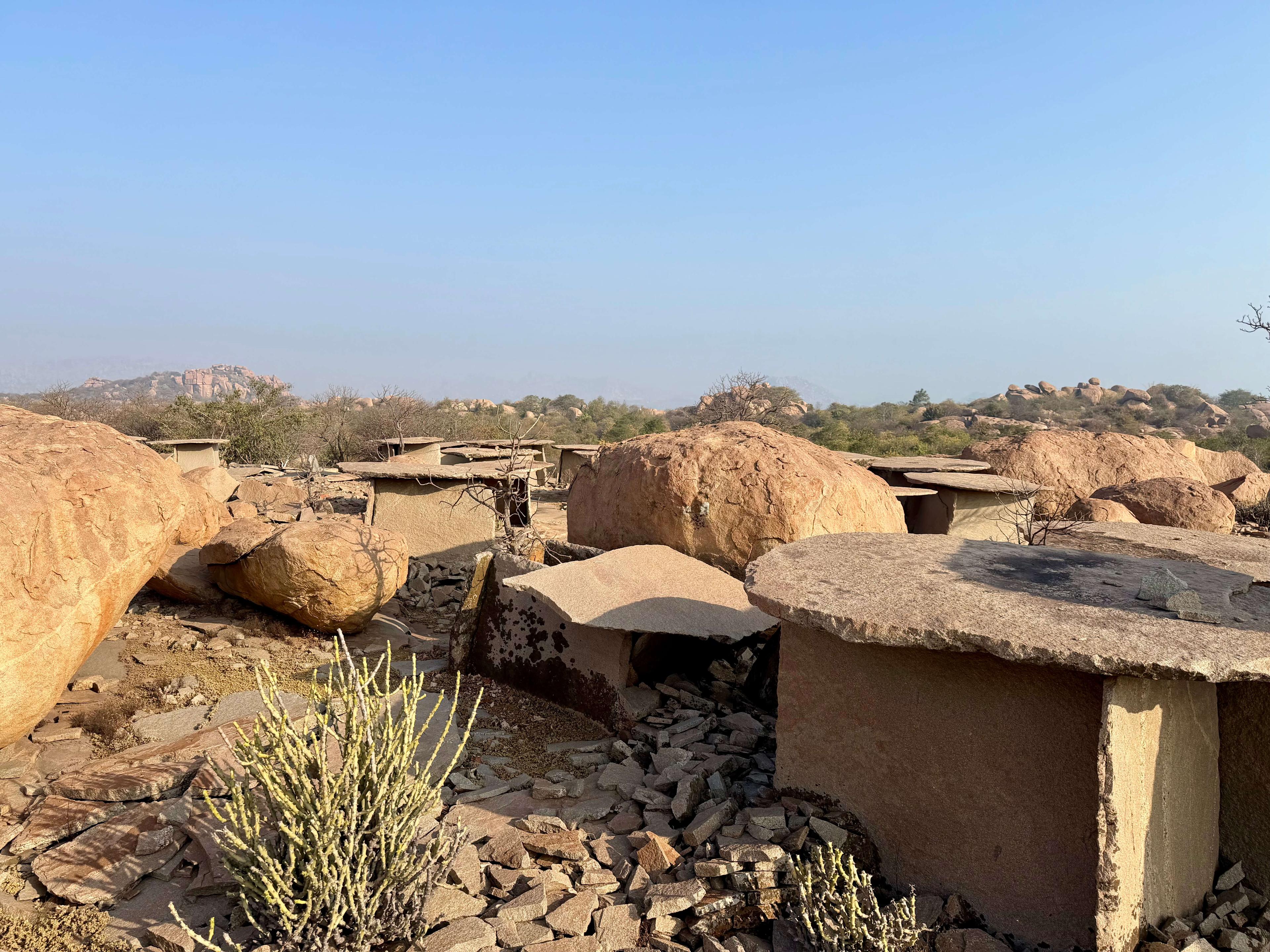
And as if that wasn’t enough, there was also this beautiful water pond on top of the hill, filled with water lilies blooming in it, adding even more magic to an already unreal place. This place genuinely holds a special corner in my heart.

After that, we came back to Hosapete and had breakfast (yes, again) at Hotel Swathi, and it was wonderful as always.
Royal Flex: When Hampi Was That Girl.
Then we switched moods completely and went to explore the royal side of Hampi, the palaces, the grand structures, the “how massive must this have been” kind of places. Of course, everything is in ruins now, but once you’re there, your brain automatically starts imagining the golden days, bustling bazaars, traders from all over the world, gold and spices being exchanged, and the whole city just alive with energy. One can only imagine, seriously.
We started with the Queen’s Bath and it’s such a wild concept that there was basically an entire royal structure made just for… bathing. The architecture itself is beautiful, and it really makes you realize how luxurious the royal life must’ve been.
Then we went to the Royal Enclosure / Royal Palace area (the ruins), and that place is massive. There were parts that felt like secret underground rooms, big darbar spaces for the king’s gatherings and celebrations, water canal systems, storage structures like Pushkarani/Kola, and so many ruins where you’re standing there thinking: what even was this building back then? Hats off to the Archaeological Survey of India honestly because a lot of this has been uncovered and studied over time, and it still feels like Hampi keeps revealing new layers.

After that we visited the Hazara Rama Temple, dedicated to Lord Rama and this was one of those “okay wow” moments. The temple is famous for its stone panels and carvings that depict scenes from the Ramayana. Like, so much of what we hear in the Ramayana is literally carved into stone here, and it’s a 15th century temple. It genuinely made me pause and think, is Ramayana actually just a belief? Either way, it was fascinating to witness.
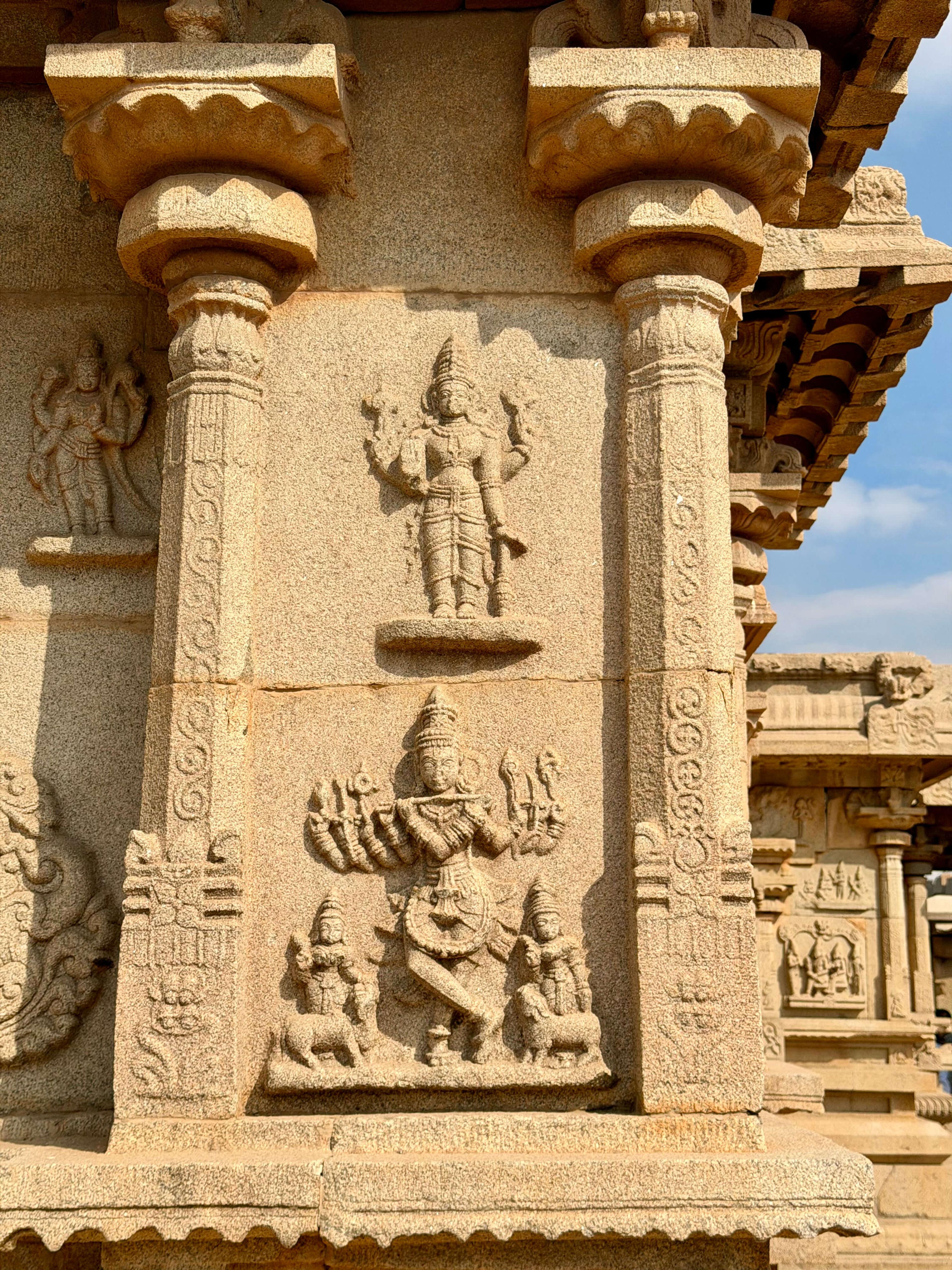
And the best part is, all of this is surrounded by different bazaars, Pan Supari Bazaar, Krishna Bazaar, Sule Bazaar, and more. Even though they’re quiet now, you can still picture how lively and grand they must’ve been back in the day.
Then we continued walking and covered Queen’s Palace, Lotus Mahal, and a few other structures in that same enclave.

Since it was our last evening in Hampi, we decided we just wanted to relax and enjoy some peaceful time. So we went to the other side of the Tungabhadra river and ended up at Mowgli’s Cafe Hampi for our lunch/dinner :) That side of the river is also known as Kishkindha in older references (Ramayana vibes again), and it definitely feels more off-beat, greener, and closer to nature.

We ate good food at the cafe, watched the sunset from that hut-like setup, and then went on a small stroll through the nature and rice fields, literally walking on the divider between the fields, not knowing where we’re going 🙂. Just boys on a “no plan, vibes only” trip.
And then we went back to the hotel… tired, happy, and still not over how much Hampi had packed into just three days.
Day four: Final Idli, Goodbye Hampi
Day four was simple and sweet, one last amazing breakfast at Hotel Swathi (yes, again 😌), then packing up, checking out, and leaving for home. No rush, no sightseeing… just that “trip is ending” feeling.
And that’s pretty much my Hampi trip.
Outro: If Walls Could Talk…
Hampi is honestly one of those places where you keep looking at ruins and still your brain is like: “bro how is this even real?” It’s off-beat, it’s beautiful, and it makes you imagine what this city must’ve looked like in its prime, when Vijayanagara was flourishing and Hampi was one of the grandest cities around.

Sadly, it was destroyed after the defeat of the Vijayanagara Empire at the Battle of Talikota in 1565. A coalition of the Deccan Sultanates captured and killed King Aliya Rama Raya, and then the city was looted, burned, and systematically destroyed for months, which is why today we’re left with these hauntingly beautiful ruins.

Old foreign travellers and traders, especially the Portuguese like Domingo Paes and Fernão Nunes, and Persians like Abdur Razzak described Hampi as a massive, prosperous, grand city (and yes, often compared it to Rome). Reading about that and then actually walking through Hampi hits different.
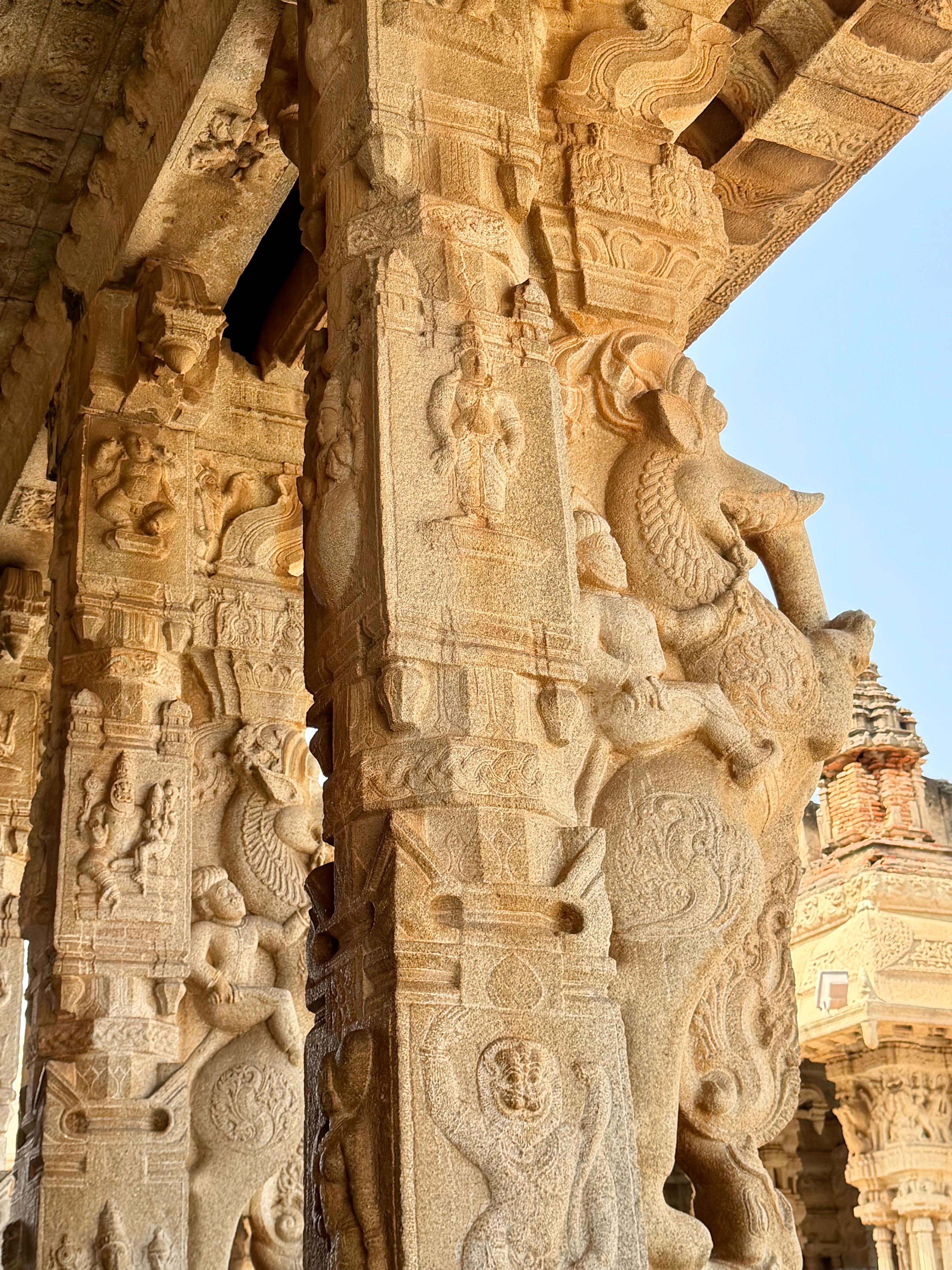
Those were my 2 cents on Hampi, hope you enjoyed reading it (and of course… the pictures too). I know I am a great photographer 😅
biee..

